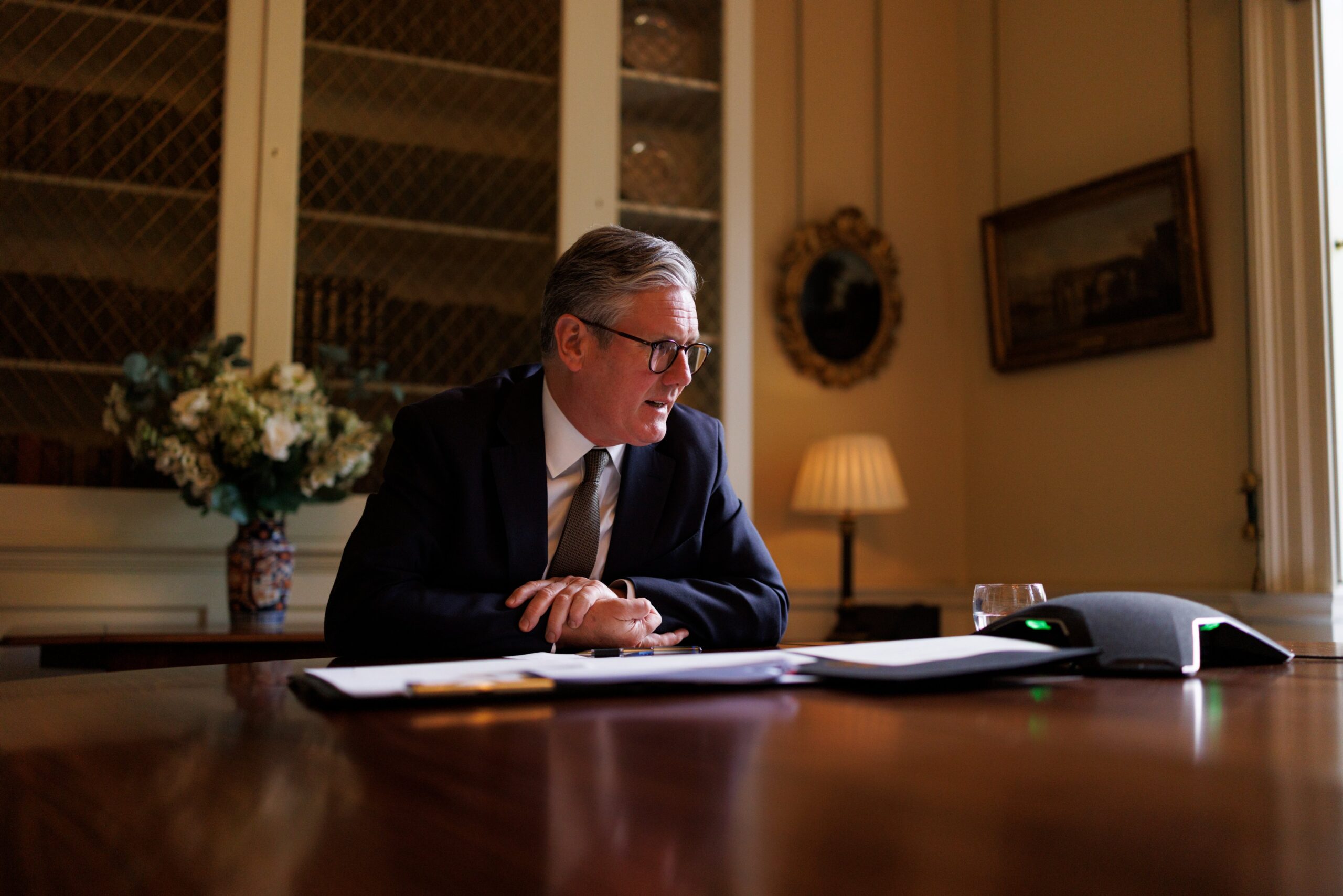
Britain is hosting talks among 35 countries this week aimed at forming a coalition to reopen the Strait of Hormuz, as European nations reconsider their position following Donald Trump’s threat to wind down the Iran conflict without securing the vital waterway.
Prime Minister Keir Starmer said on Wednesday that the meeting of foreign ministers would discuss ways to make the strait accessible and safe once the fighting has stopped.
Military planners are also due to convene this week to assess naval options.
Foreign Secretary Yvette Cooper will chair the ministerial talks to evaluate diplomatic and political measures available to restore freedom of navigation, guarantee the safety of trapped ships and seafarers, and resume the movement of vital commodities, Starmer said.
Coalition takes shape outside NATO framework
France, the Netherlands, and Gulf states have been engaged in private discussions about the naval assets they would be willing to contribute to any potential coalition, according to four officials briefed on the talks.
Military escorts, minesweeping operations, and other defences against possible Iranian attacks are all under consideration.
The proposed coalition would not operate as a NATO mission and would include countries from outside the military alliance, the officials said.
The plan is designed to be deployed after a ceasefire in the US-Israeli war against Iran, but is being accelerated in response to Trump’s threat to exit the conflict unilaterally.
Energy crisis and Trump pressure force a rethink
Tehran closed the strait — through which roughly 20% of the world’s oil and gas previously flowed — in retaliation for US-Israeli strikes in late February.
Global energy prices have surged in response, raising fears of a broader economic crisis.
European countries had initially rebuffed Trump’s demand last month to send their navies to the strait, wary of being drawn into the conflict.
Diplomats privately acknowledged that their governments were also reluctant to help Trump resolve a problem of his own making.
But the severity of the energy crisis and concerns about a prolonged blockage of oil and gas shipments, combined with Trump’s repeated condemnation of NATO allies, have prompted a reassessment, the officials said.
On Tuesday, Trump told countries including Britain to “go get their own oil” if they faced shortages from the Hormuz crisis, rebuking them for refusing to join the US-Israeli war against Iran.
Complexity and coordination challenges remain
Starmer cautioned that any international operation to keep the strait open would be neither simple nor swift.
“I don’t think you can necessarily assume that a de-escalation of the conflict would necessarily at the same time bring the safe reopening of the Strait of Hormuz,” he told a Downing Street press conference, adding:
“I do have to level with people on this — it will not be easy.”
He said the core problem for shipping in the region was not the availability of insurance but the safety and security of passage itself.
Two officials briefed on the discussions said coalition-building has been complicated by the uneven nature of the assets on offer.
Some countries have offered minesweepers but no frigates to defend them, creating gaps in any viable operational plan.
Wider participation beyond the core 35
A spokesperson for Belgium’s foreign minister likened the effort to the coalition of the willing formed around Ukraine, assembled to protect a potential ceasefire in Russia’s war against Kyiv.
Belgium is not among the 35 countries officially signed up to the UK-led initiative but remains willing to participate should a ceasefire materialise.
“Everything will depend on what the decision of President Trump will be,” the spokesperson said.
“It is not very clear at this moment what the next stage will be.”
The post UK leads push to reopen Hormuz as energy crisis forces rethink appeared first on Invezz
