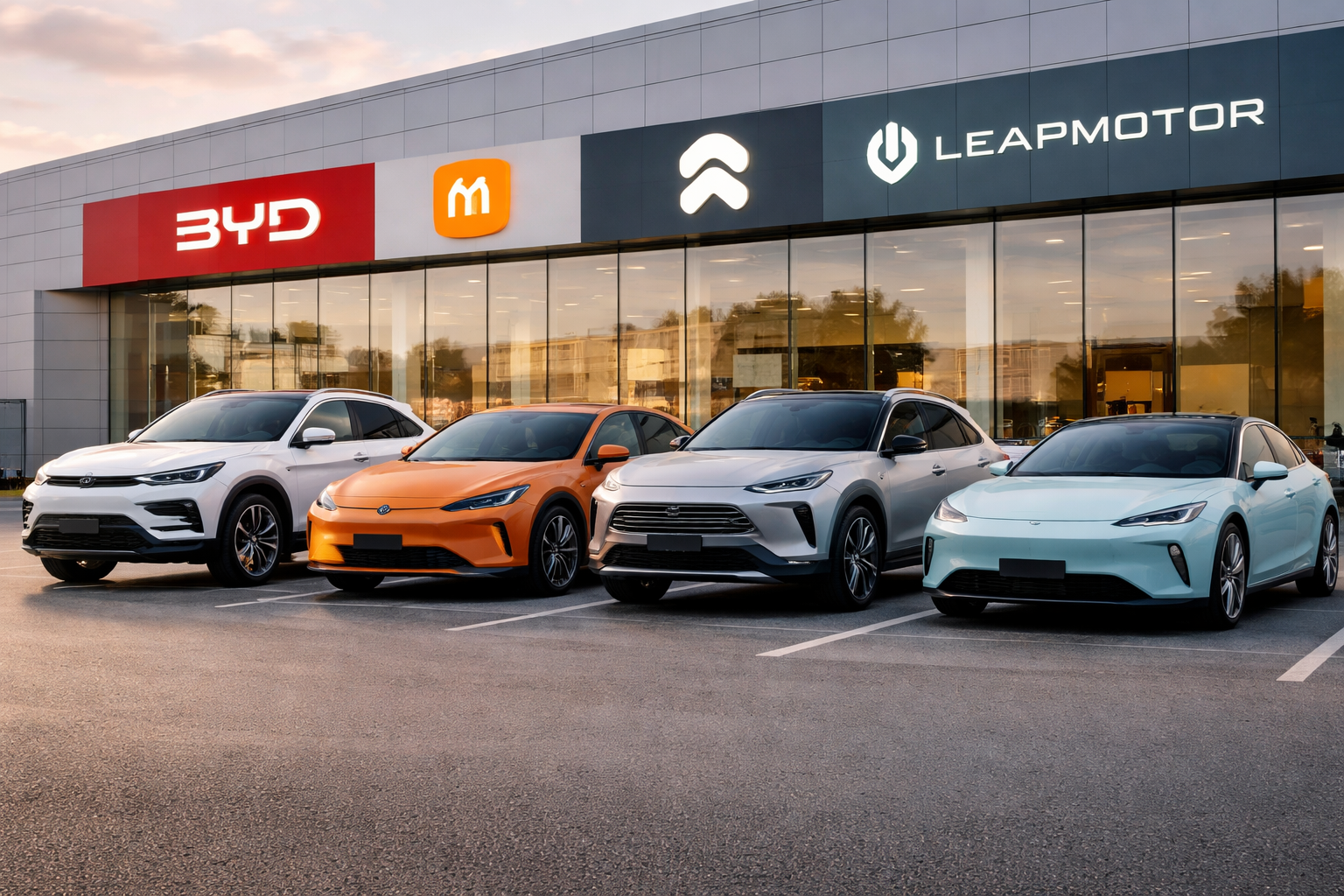
China’s electric vehicle market is becoming more competitive as new sales figures show rivals closing the gap with industry leader BYD.
CNBC reports that data from the first two months of 2026 shows several automakers gaining traction while the world’s largest EV maker recorded a sharp drop in domestic deliveries.
BYD’s combined January and February sales declined compared with the same period a year earlier.
The numbers were adjusted to account for the seasonal slowdown linked to the two-week Chinese New Year holiday in mid February.
Meanwhile, competitors including Leapmotor, Xiaomi, Nio, and Geely’s Zeekr brand reported strong increases in sales, highlighting intensifying competition in the world’s largest EV market.
Rivals gain ground
BYD’s combined January and February sales in 2026 fell roughly 36% year on year to 393,300 after adjusting for the Chinese New Year slowdown.
Other EV makers posted stronger results. Leapmotor recorded 60,126 sales across the two months, up 19% from a year earlier.
Xiaomi delivered more than 59,000 vehicles in the same period, marking a 48% year on year increase.
Premium-focused brands also saw strong growth.
Nio’s combined sales rose about 77% from the previous year, while Geely’s Zeekr brand recorded an increase of roughly 84%, according to CNBC’s calculations.
Not all companies saw gains.
Xpeng reported the largest year-over-year decline among major EV makers, with deliveries falling about 42% to 35,267 vehicles.
Li Auto’s deliveries also slipped nearly 4% to 54,089 units.
Competition intensifies
The figures suggest China’s EV market is becoming more balanced as competitors target segments once dominated by BYD.
The company held around 26% to 34% of China’s new energy vehicle market between 2024 and 2025.
Rivals, including Geely and Leapmotor, have increasingly focused on the mid-market segment where BYD previously held a strong market share.
Manufacturers are adding features while keeping prices competitive, a strategy widely described in China’s EV industry as involution.
Xiaomi’s YU7 SUV became China’s best-selling passenger vehicle in January, selling more than twice as many units as Tesla’s Model Y.
Tesla’s Model Y had led sales the previous month.
Tax change effect
China reinstated a 5% purchase tax on new energy vehicles at the end of 2025 after years of exemptions.
The change may have created a demand vacuum early in the year as buyers rushed to purchase vehicles before the tax took effect.
Even at the reduced rate, the cost can be high.
A vehicle priced at $200,000 would face roughly $10,000 in additional tax.
Tesla has begun offering five year 0% interest loans and seven-year ultra-low interest loans.
Xiaomi has also introduced seven-year low-interest financing deals through promotions announced on its official Weibo account.
BYD shifts focus
As competition intensifies domestically, BYD has expanded into overseas markets.
In February, the company’s exports exceeded its domestic sales for the first time, according to CNBC.
Overseas sales crossed one million vehicles in 2025.
The company is preparing new product launches including Blade Battery 2.0 and second generation flash charging technology.
China’s regulators are also scaling back EV incentives to encourage greater self reliance among domestic automakers.
The post China EV race tightens as BYD loses ground to rising rivals appeared first on Invezz
