The geopolitical tensions in the Middle East continue to ripple across the global markets.
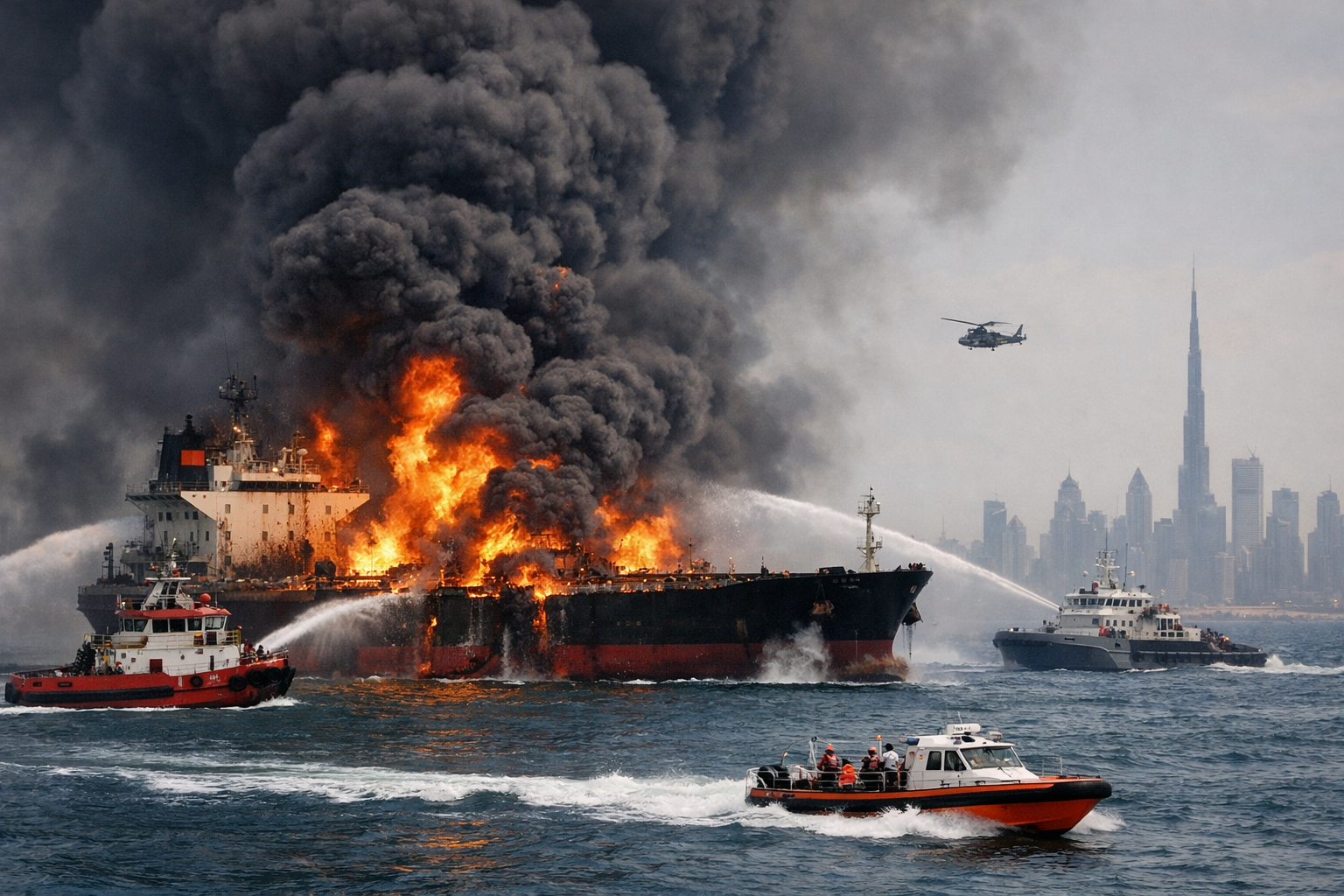
An Iranian strike on an oil tanker near Dubai has sharpened fears of supply disruptions, sending crude prices higher.
The fallout is already being felt far beyond the region, with countries like South Korea moving to shield their economies from rising fuel costs.
At the same time, the shifting landscape is accelerating investments in digital infrastructure.
Iran strikes hit oil tanker near Dubai
The tensions in the Middle East escalated on Tuesday after a giant oil tanker anchored off Dubai was struck in an Iranian attack.
The Kuwait-flagged vessel, carrying up to 2 million barrels of crude, is being assessed for damage amid concerns over a possible oil spill.
As per the reports, the tanker caught fire, but no casualties were reported.
The development came as US President Donald Trump warned earlier that Washington could “obliterate” Iran’s energy infrastructure if Tehran does not reopen the Strait of Hormuz.
Oil prices continue to rattle markets
The oil prices remained high for a fourth straight session on Tuesday as the escalating Middle East conflict tightened global supply.
Brent crude hovered above $110 a barrel, on track for one of its biggest monthly gains ever, while US crude also posted sharp increases.
The rally has been driven largely by disruptions around the Strait of Hormuz, and ongoing attacks on shipping and infrastructure have compounded fears of prolonged supply shortages.
The analysts say volatility is likely to persist, with damaged infrastructure and rerouted shipments keeping markets on edge.
South Korea planning additional budget amid Iran war
As the Iran war drives the energy prices higher, South Korea is scrambling to cushion the economic blow.
The government has proposed a supplementary budget of about $17 billion to support households and businesses hit by rising fuel bills and inflation.
Seoul is particularly exposed as it imports a vast majority of its energy, with a heavy reliance on Middle Eastern crude.
Officials say funds will be used to stabilise fuel prices, aid vulnerable groups, and support industries struggling with higher input costs.
The authorities are bracing for prolonged volatility in global energy markets.
India’s Airtel secures $1 billion in fresh funding
Bharti Airtel has secured $1 billion in fresh funding for its data centre arm, Nxtra, bringing in global investors Alpha Wave Global, Carlyle, and Anchorage Capital.
The deal underscores growing demand for digital infrastructure in India.
The investment values Nxtra at about $3.1 billion and will fund an aggressive expansion of its data centre capacity across the country.
Airtel will retain a controlling stake, signalling the business is central to its long-term strategy.
Nxtra already operates a wide network of facilities and is positioning itself to capture a larger share of the fast-growing market.
The analysts said that the deal highlights rising investor appetite for India’s data infrastructure boom.
The post Morning brief: Iran tanker strike, oil rally, Airtel’s $1B push appeared first on Invezz
