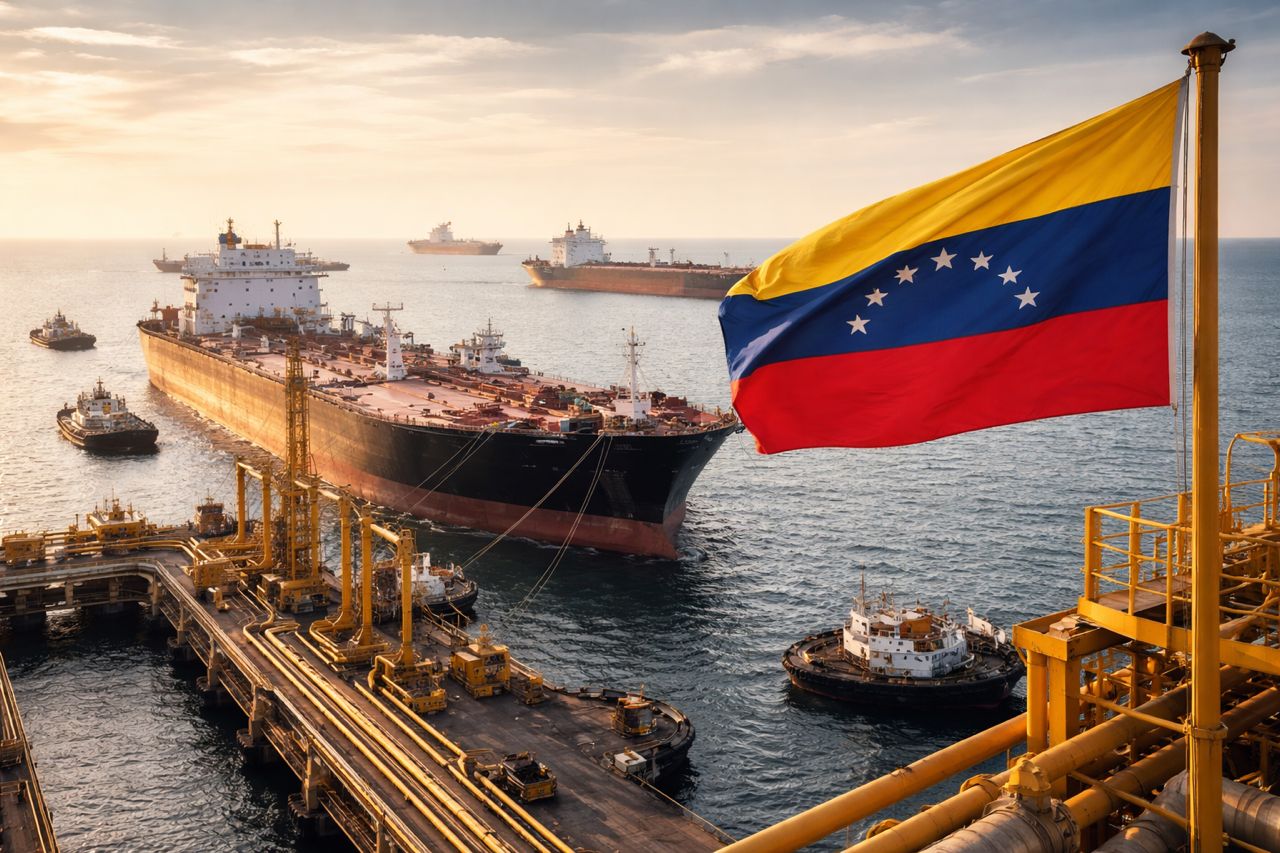
Crude shipments to customers in Asia have not left Venezuela’s main oil ports for a fifth consecutive day on Tuesday, according to shipping data, extending the blockade for the OPEC nation’s top export market.
Venezuela ships most of its crude to Asia-based buyers, so the extended closure is a major blow to state-run oil company PDVSA at the most difficult moment for the firm both operationally and logistically.
The absence of shipments comes as the United States ramps up pressure on Venezuela through an oil embargo that has made it hard for the country to place barrels abroad.
PDVSA has been unable to ship crude to its main overseas customers because tankers are idled at key ports, raising the potential for bottlenecks throughout its production and refining system.
Chevron resumes limited US exports
While Asian shipments have paused, Chevron, PDVSA’s biggest joint-venture partner, restarted exports of Venezuelan petroleum to the United States on Monday, following a four-day pause.
As flights to Venezuela resumed, the corporation also called workers stationed abroad to return to their offices in Venezuela, signifying a partial normalisation of operations.
In recent weeks, Chevron has emerged as the sole corporation capable of shipping Venezuelan crude promptly.
Its resumed shipments illustrate the widening disparity between the limited flows to the United States and the paralysis affecting exports to Asia.
The restart demonstrates Chevron’s distinct operational position at a time when most other purchasers confront logistical and legal challenges.
Sanctioned tankers depart in ‘dark mode’
While activity has since stalled, there was movement earlier this month in Venezuelan waters, when some dozen or more sanctioned vessels that had loaded crude and fuel during December sailed from the nation in early January.
Shipping data shows that those tankers loaded around 12 million barrels to move to China.
The ships departed Venezuelan waters, sailing in what is described as “dark mode,” with transponders disabled, effectively circumventing a US tanker embargo that has been in place since late July.
Despite the restrictions, these moves meant that crude arrived at Asian destinations, but these shipments seem to have come to a halt in the last few days as ports have been unable to clear fresh parcels.
It’s not been clear from Washington whether those departures were sanctioned.
Neither PDVSA immediately responded to a request for comment on the halts to exports or the sanctioned tankers moving in and out of the country.
Risk of deeper production cuts
PDVSA, which has already struggled to maintain constant output and keep refining plants functioning, faces an increasing problem as exports to Asia become stalled.
With crude and residual fuel inventories building up due to a lack of outward shipments, the business may be compelled to tighten the production restrictions it has begun applying in recent days.
An overabundance of inventory can quickly strain storage capacity, especially when exports decline dramatically.
Without access to its key Asian markets, PDVSA has few choices for placing extra barrels, putting strain on both upstream and downstream operations.
The incident demonstrates Venezuela’s oil sector’s vulnerability to external constraints and logistical problems.
As exports remain delayed and there is ambiguity about future authorisations or enforcement, PDVSA’s capacity to maintain output will most likely be determined by whether shipments resume or other outlets arise.
For now, the fifth day without Asian deliveries underscores the mounting impact of US pressure on Venezuela’s oil trade, even while restricted flows to the United States continue through Chevron’s operations.
The post Venezuela oil ports halt Asian shipments as US pressure tightens appeared first on Invezz
